Two generations, one honest comparison
Porsche 964 vs 993: The Air-Cooled 911 Buying Guide
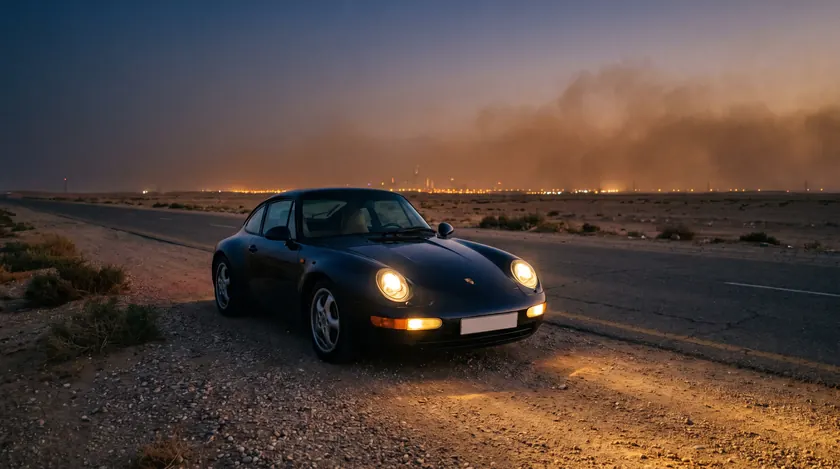
The 964-versus-993 argument rarely gets settled by spec sheet alone, not in our experience walking clients through both at auction previews. Both are 3.6-litre flat-sixes, both are proper analog 911s, and both have devoted, occasionally tribal, followings who will insist the other generation is the wrong answer.
Here is the comparison we would actually give a client standing between the two: what each generation costs today, what breaks on them, and which buyer each one genuinely suits, not a marketing verdict where somehow the answer is always buy both.
964 vs 993 at a glance
The spec sheet gap between the two is smaller than the price gap most years, which is exactly why the comparison matters.
| 964 (1989-1994) | 993 (1994-1998) | |
|---|---|---|
| Engine | 3.6L flat-six, 250hp naturally aspirated (Turbo 3.3L/320hp or 3.6L/360hp) | 3.6L flat-six, 272hp rising to 285hp from 1996 with VarioRam (Turbo 3.6L twin-turbo, 402hp) |
| Gearbox | 5-speed manual (G50) or 4-speed Tiptronic, the first Porsche offered with Tiptronic | 6-speed manual, a 911 first, or 4-speed Tiptronic |
| Price band, good-to-excellent Carrera coupe | $65,000 to $150,000 (Turbo 3.6 from around $298,000) | $95,000 to $200,000 (Turbo, RS and GT2 variants $230,000 to over $2 million) |
| Documented five-year trend | Hagerty condition #3 average around $149,600, up 69% over five years, the strongest five-year gain of any 911 generation per that source | Blended whole-generation Hagerty average around $281,000, pulled upward by Turbo, RS and GT2 variants in the mix |
| Weak points to check first | Dual-mass flywheel (pre-1992), cylinder head studs, oil leaks at the cylinder base (pre-1991), rust at screen surrounds and arches | Rear main seal oil leak (gearbox-out fix), camshaft housing seal leaks, rear suspension mount wear, electrical faults |
| Best suited to | Buyers who want the more overtly analog early-90s 911 and the strongest recent value momentum, and who will accept patchier service records on the cheaper end of the range | Buyers who want the last air-cooled 911 generation and a 6-speed manual, and will pay a real premium over the 964 for both |
What are the common problems with a Porsche 964?
- Dual-mass flywheel failure; pre-1992 Freudenberg units were genuinely unreliable, 1992-onward LUK units are far more durable
- Cylinder head stud breakage, causing oil leaks and rough running
- Chronic oil leaks around the cylinder base on pre-1991 cars, which had no gasket there until Porsche redesigned it in 1991
- A failed DME fuel relay, described as a very common 964 electrical fault
- Rust at the windscreen and rear-screen surrounds, rear arches, door bottoms, battery tray and sunroof drains
- Matching-numbers verification and full service history; many 964s have patchy records simply because the model spent years at historically low values before anyone thought to keep meticulous paperwork
What are the common problems with a Porsche 993?
- Rear main seal oil leak, a cheap part but a labor-intensive fix that requires pulling the gearbox
- Camshaft housing seal leaks, a separate oil-leak point from the rear main seal
- Rear suspension mount wear, causing noise, vibration and handling issues as the car ages
- Electrical faults, faulty switches and malfunctioning instrument clusters typical of the era
- A/C compressor failure or refrigerant leaks
- A genuine manual-versus-Tiptronic value gap of roughly 35 to 40%; confirm the gearbox actually matches the price being asked
Which is more reliable, the 964 or 993 engine?
Neither generation has a catastrophic engine design flaw, and both share the same mature air-cooled specialist network, so parts scarcity is not really the deciding factor for either. The distinction is in what fails. The 964's issues, head studs, the dual-mass flywheel, are more consequential if ignored, genuine failure modes rather than simple seepage. The 993's issues, the rear main seal, camshaft housing seals, tend to be oil seeping past a gasket rather than a part failing outright, expensive in labor because the gearbox has to come out, but rarely the kind of neglect that strands a car. If we had to characterize it plainly: the 993 arrived as the more sorted design by the time Porsche got there, while the 964 carries the deeper, more established specialist knowledge base simply because it has been cheap and plentiful for longer.
Why is the 993 considered the last real air-cooled 911?
Because it was. Porsche built the 993 from 1994 to 1998, and it was the final 911 generation with the air-cooled flat-six architecture that had defined the car since 1963, before the next generation moved to a water-cooled engine. That single fact is most of why the 993 commands the premium it does over the 964 today: it is not just a better-sorted evolution of the same car, it is the last one built the old way, and buyers pay for that distinction specifically, not only for the 6-speed gearbox or the extra horsepower.
Prefer to just ask? Send a short message, we reply the same day.
Ask a questionIs the 964 or 993 a better investment?
Be careful comparing the two headline numbers directly, they are not measuring the same thing. The 964's $149,600 figure is a condition #3, good-condition average, up 69% over five years, the strongest five-year gain Hagerty attributes to any 911 generation. The 993's $281,000 figure is a blended whole-generation average that includes Turbo, RS and GT2 variants trading well into seven figures, which pulls the mean far above what an ordinary manual Carrera actually costs. Treat the 964 number as the more directly useful one if you are comparing ordinary Carrera coupes specifically. Treat the 993 number as a reminder that the low end of that generation, a documented manual Carrera, is arguably underpriced relative to what the nameplate as a whole is doing. For the wider market context behind these figures, see our classic car investment trends 2026 guide.
Who should buy which
If budget is the main constraint and you want the strongest recent value momentum on paper, buy the best-documented 964 Carrera you can find, manual gearbox, verified matching numbers, and get the dual-mass flywheel and head studs inspected before you commit to anything else. If you want the definitive last-of-its-kind air-cooled 911, a 6-speed manual, and are prepared to pay a real premium for both, buy the 993 and treat a clean rear main seal and documented service history as non-negotiable at the point of sale. Buyers in the Gulf have shown a documented preference for air-cooled 911s generally as a long-term hold, cited at 5-8% a year; buyers evaluating the South African market should note CAR Magazine's separate observation that air-cooled 911 values there are considered to have already peaked locally, a genuinely different picture from the Gulf's. Whichever you choose, when the time eventually comes to sell, a considered private sale usually nets more than a public listing, for exactly the reasons documented in that guide.
Frequently asked questions
How much does a Porsche 964 or 993 cost today?
A good-to-excellent 964 Carrera coupe runs roughly $65,000 to $150,000 as of 2026, with Turbo 3.6 variants starting around $298,000. A 993 Carrera in the same condition band runs $95,000 to $200,000, and Turbo, RS and GT2 variants trade from $230,000 to over $2 million. Gearbox, documented history and originality move a specific car within those bands more than any other single factor.
Should I buy a manual or Tiptronic 964 or 993?
Manual, if the goal is value retention and driver appeal. The 993 in particular carries a documented 35 to 40% value gap between manual and Tiptronic examples, and we would expect a similar preference to hold on the 964, whose Tiptronic was the first fitted to any Porsche and is regarded as a period curiosity more than a desirable spec today.
Does matching numbers matter as much on a 964 as it does on rarer Porsches?
Yes, arguably more, because so many 964s spent years at low values with indifferent ownership and patchy paperwork. A verified matching-numbers 964 with full service history is a meaningfully different purchase from a visually similar car with gaps in its records, even if the asking prices look close.
Is a 964 or 993 Turbo a realistic entry point, or only the Carrera?
For most buyers, the Carrera is the realistic entry point. Turbo variants start around $298,000 on the 964 and range from $230,000 well past $2 million on the 993, a different budget conversation entirely from the naturally aspirated Carrera coupes this guide is mostly about.
Deciding between a 964 and a 993
Tell us your budget and what you want to feel like from behind the wheel and we will point you at the generation that actually fits, not the one we happen to have in stock.
Ask a question